
Presented by the
Newfoundland's Grand Banks Site
to assist you in researching your Family History
Click on the graphic below to return to the NGB Home Page
To contribute to this site, see above menu item "About".
These transcriptions may contain human errors.
As always, confirm these, as you would any other source material.
Private Francis E. LeMessurier
Royal Newfoundland Regiment
Regt # 853
Donated by Chris Morry
 |
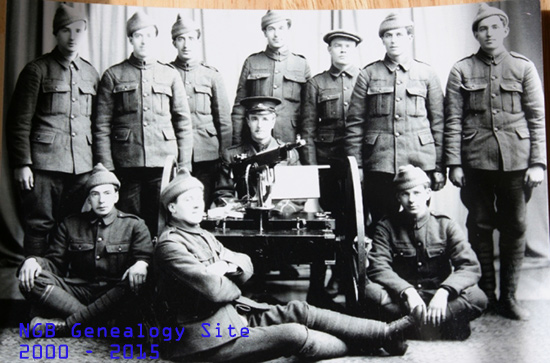 |
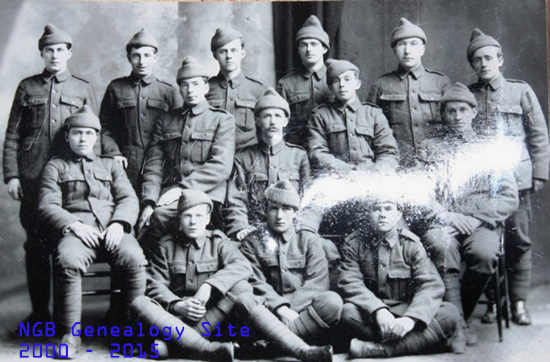
| RNR Group Photo, including
Francis E. LeMessurier [Middle Row Second from the Left] |
Francis E. LeMessurier [Seated on the Left] |
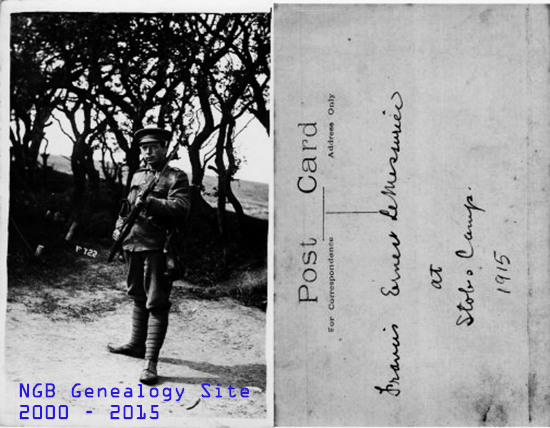 |
| Francis Ernest LeMessurier Stobs Camp 1915 |
|
Francis Ernest Le Messurier enlisted in the RNR as Private, Regt. No.
853 on December 30, 1914. |
Return to the Main Military Records Index
Military Records Contact: Sherwin Flight
Newfoundland's Grand Banks is a non-profit endeavor.
No part of this project may be reproduced in any form
for any purpose other than personal use.
JavaScript DHTML Menu Powered by Milonic
© Newfoundland's Grand Banks (1999-2025)
Hosted by

Your Community, Online!
![[Recent]](../../recent.gif)
![[Home]](../../home.gif)